
17 Time Management Strategies to Get Things Done
Managing time and getting things done is something that we all struggle with, but these time management strategies are game changers to your productivity game. Try these time management activities to get ahead of your never ending task list. Using the right time management techniques can help you work smarter and help you create a productive schedule.

Prioritize Tasks Using the Eisenhower Matrix
For effective time management, you must prioritize your task well. Often you may spend time on things that are not important to you but may seem urgent or are priorities of others only to delay the things that matter the most. So always have a look at your To- Do list to prioritize your tasks and plan those that are most important and first followed by others.
By Prioritizing you will also be able to get an insight into tasks that align with your goals and liking that need much attention and those that can be delegated to others. Delegating your tasks to others or outsourcing them to others is also effective time management as these tasks may end up taking much of your time or your time may be best put to use for other highly important tasks. There are different ways to prioritize your tasks, but the most widely used method is the Eisenhower Matrix, you must read more about it here.
Batch tasks
Task batching is a process of grouping similar tasks in a batch and completing them instead of doing them one by one over different days or at different times throughout the day. The simplest way to understand batching tasks is by answering emails. You either decide 1 hour towards the end of the workday to answer all the emails of the day or spend a few minutes at random answering emails as they come. The latter will distract you and make you less efficient.
Also, when you switch from one task to another you lose track of the work at hand and need a few minutes to realign your thoughts to get back to it. This makes you inefficient and adds to work stress. So spend some time with your To-Do list to identify tasks that are similar in nature and clubbed together to make better use of your time.
Follow Time – Blocking
Time blocking is a powerful strategy for better time management. You divide your time in small duration as blocks and assign a specific task to it ensuring to complete it in the assigned time. By time blocking you can avoid distractions, procrastination, and multitasking. You should time block sufficient time to complete the task. This makes you efficient and mindful of the time you spend on different activities. You can either time block your entire day or some part of the day based on your need. It is also a very effective way to plan your day. Google Calendar is the best way to do it. For more details on using time blocking read Manage Your Time Like a Pro with Time Blocking.
Make a To – Don’t List
While we often focus on building new habits and learning new things it is equally important to identify things that do not align with the results we seek. So in order to get good with time management make a list of To- Dont’s. These are things that distract you, waste your time, or are counterproductive. These can be as simple as checking your phone for every notification or wasting your time chatting with coworkers. Identify this that limits you and destroys your time and keep it handy probably on your computer screen as sticky notes or desktop. This will limit distractions.
Follow 1-3-5 Rule
The 1-3-5 Rule helps you give a good structure to your day and ensure that tasks of varied priority and difficulty are comprehensively covered during your work day. To follow the 1-3-5 Rule you must divide your day to attending 3 types of tasks
1 = 1 large high-priority task is attended to first in the day.
3 = 3 medium size or priority tasks are attended after the 1 large task
5 = 5 small tasks are, generally mundane tasks that are attended at the last.
Following this technique, you will be able to give attention to all types of work and get a complete balance of productivity and efficiency.
Use the 80/20 Rule (Pareto Principle)
This rule feels applicable to life in so many ways; there are just 20% of things that give you 80% of the results in your life. The 80/20 Rule means that there is a small part of what we do that creates the most results. So out of 10 things you need to do, only 2 of them really help you move forward or make a big difference to the results that you are looking for, i.e., the 20%. The other 8 are just things that keep one busy or are required to keep things running; it’s not that they don’t matter, but they contribute less to the overall success. So instead of trying to do everything, find your 20% and focus your time and energy on these few tasks that actually matter. This will help you work smart, not just hard.
Use Pomodoro
Pomodoro is a simple but powerful way to be efficient with your time. It helps you get things done and also not get burnout. The Pomodoro Technique of the time-management method involves working with complete focus without a break for 25 minutes and then taking a five-minute break. If your task is completed in 25 minutes you can move to the next or continue with the same for the second round of 25 minutes, followed by a break. After 4 such Pomodoros, you should take a longer break of 20 to 30 minutes. This increases your focus and productivity, eliminates distractions, and reduces stress. On days I have a lot of work that needs deep focus I use Pomododro.
Use a planner
In order to be good at time management you must be organized this helps you plan better and avoid being all over the place. One of the most important things you must have for better time management is a dedicated work planner.
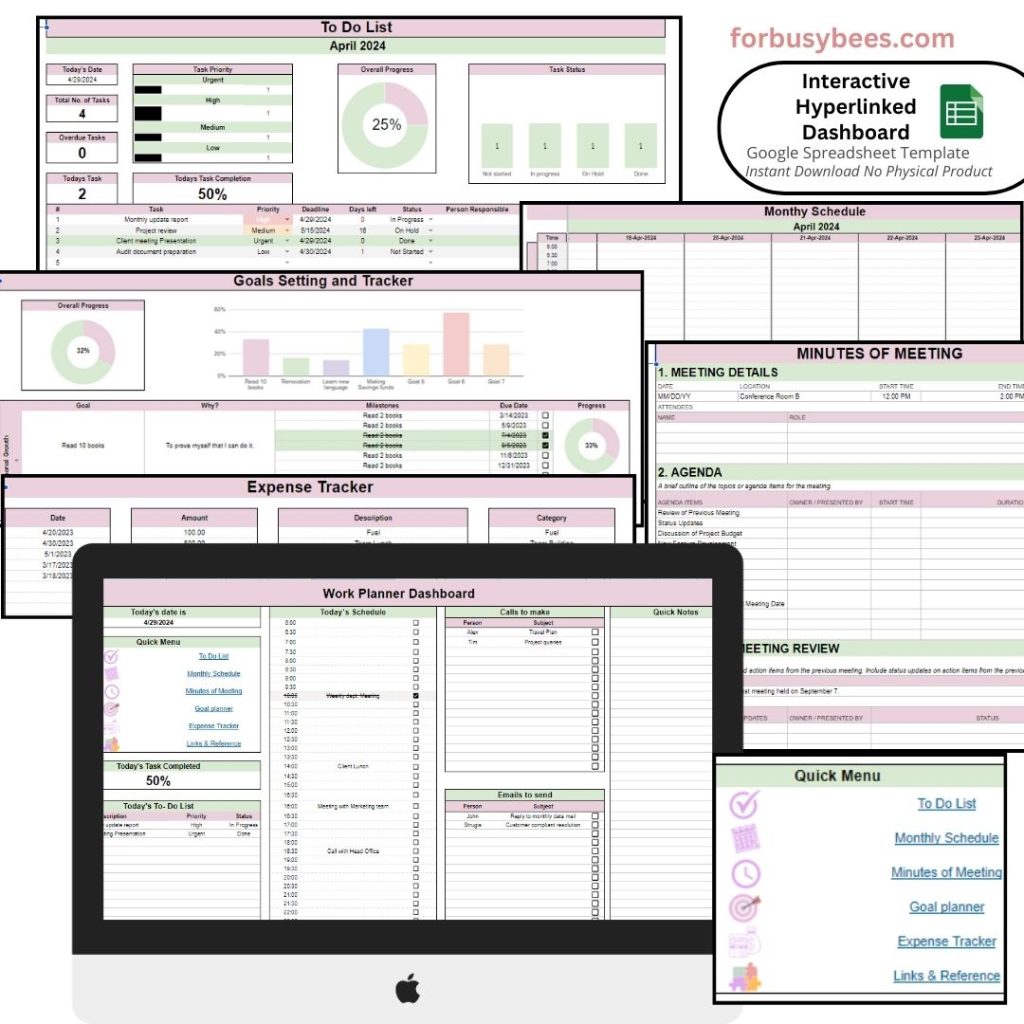
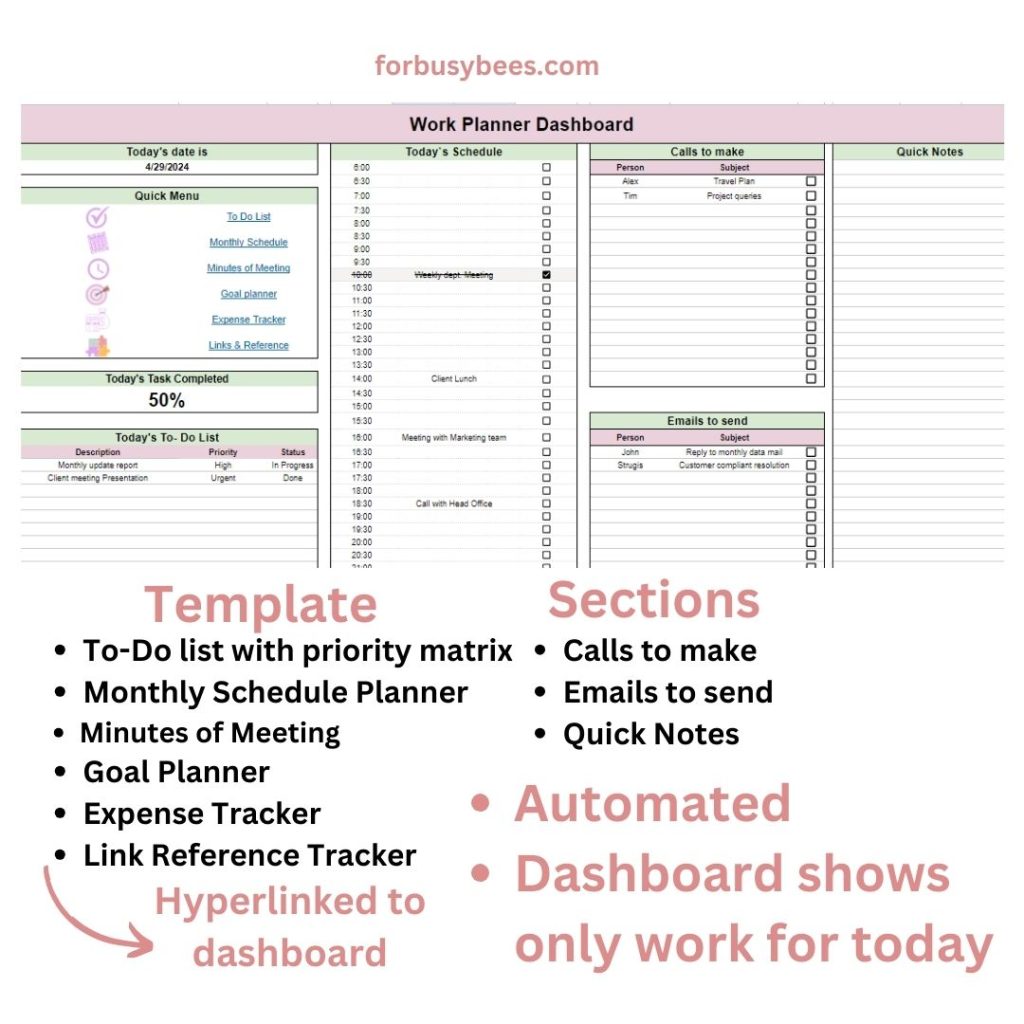
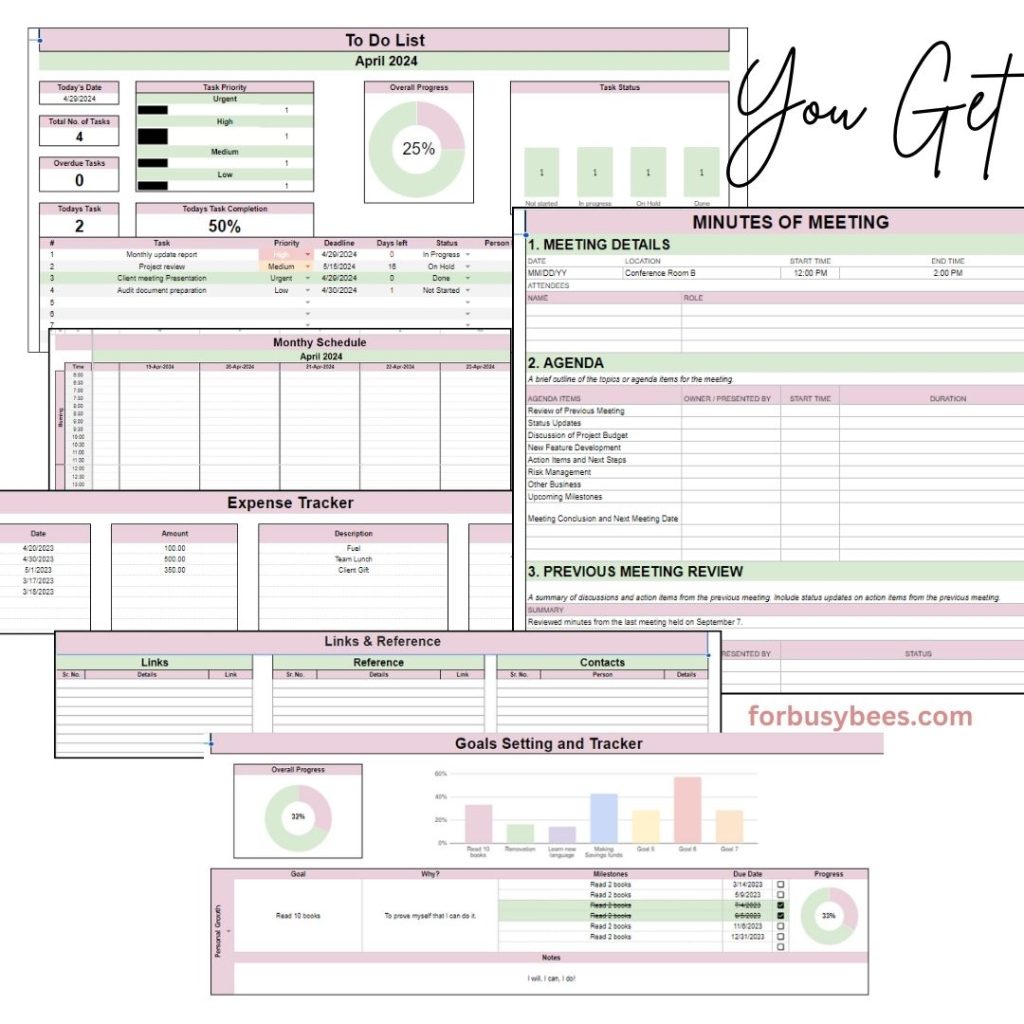
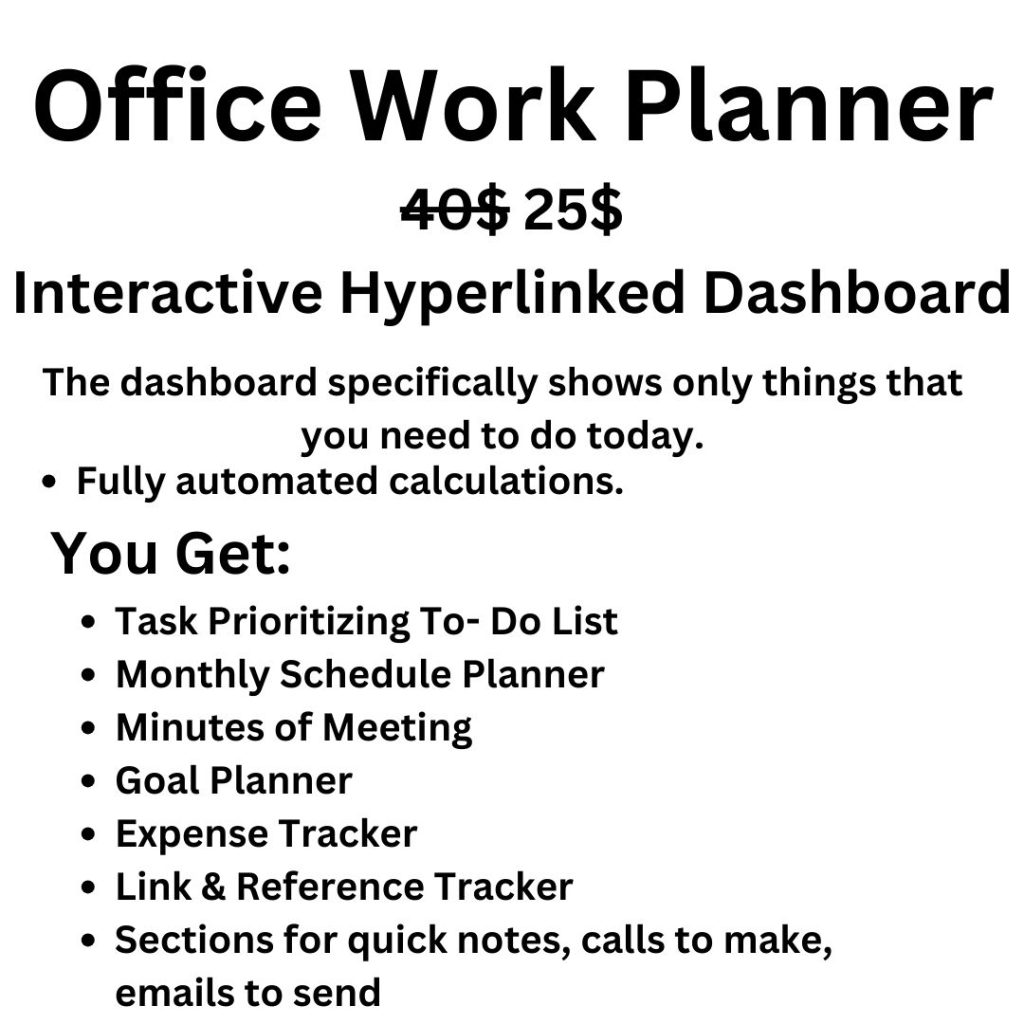
Having notes on random pieces of paper, reminders, and tasks on a sticky note everywhere makes you unorganized, and distracted and you are unable to plan and execute this. You also waste a lot of time searching for information that you had captured somewhere. Time management is not only about managing time well but also to avoid wasting time. With a dedicated work planner, you can take notes, list tasks, and plan and schedule appointments everything will be in one place. Here is a work planner that I liked using in the past.
I use the below work planner, it has everything you need to be organized and productive at work. The interactive dashboard is the best feature, it tell you everything you need to do for the day.

Follow the “Eat That Frog” Rule
Most of the time we know what is important and need to be done but the fear in mind to do the difficult thing and the false satisfaction one feel on completing simple tasks that are insignificant make us ignore the important and significant task. If that is the case with you too, start your day by “eating the frog”. Which means do that one big task you’re most likely to put off first in the day. It might not be fun and usually the most important thing on your list takes more time than others. But tackling it first gives you a win early in the day and clears up mental space for everything else. You will feel more calm and in control of your task list for the day once you are done with it. You don’t have that important task hanging over your head.
Structure your day with 8-8-8 Rule
A structured day give a clear road map to your mind to go through the day, you waste less time as you have alloted different segments of your day to all life necesseties like work and studies, personal life and self care. The 8-8-8 Rule is a concept that suggests dividing your day into three equal 8-hour segments for work, leisure, and sleep. This allows you to create a balanced and structured daily routine, ensuring that you allocate sufficient time for work-related activities, personal and leisure pursuits, and a full night’s sleep. I have a detailed post on helping to organize your day with the 8-8-8 rule, it is one of the most loved post you can read about it here.
Set Monthly Goals
To be good at time management you must be clear on your expectation, To-Do list gives you an overview of the task but without goals you are directionless. At the start of each month spend some time setting out goals for the month these will help stay focused on things that matter and prioritize well.
Before setting monthly goals spend some time reflecting on the previous month. This will give you great insight into the achievements and failures but most importantly identify the things that waste your time and those that are good return for the time spent. Based on these observations you should refine your new month practices.
This way you can easily manage your time more effectively and make sure that you are achieving your desired results and be more intentional with the way you spend your time. Monthly planning need not take a lot of your time, I spend no more than 30 minutes at the start of each month and they are totally worth it, read Monthly Goal Planning for Balanced Life under 30 min.
P.S. For more information on monthly reflection read How to do Monthly reflection quickly and 100 end of month reflection questions for self-review
Automate Repetitive Tasks
With the advent of technology, there are many ways in which you can automate tasks. You should start with identifying tasks that are repetitive in nature and find ways to automate them to save time.
These can be as simple as creating reminders for tasks or deadlines and scheduling follow-up emails or messages. You can also make templates and build dashboards so that you don’t have to spend time making all the graphics and reports from scratch. By automating these tasks, we can save a lot of time that can be better spent on important tasks.
Plan your week
In order to get more done and take charge of your time use your To-Do list to plan the tasks for the week. A weekly plan for the next week will help you create a clear roadmap for yourself so that you know exactly what needs to be done and when. When you plan in advance you have better control of time as you can plan challenging tasks on days you are less occupied and vice versa.
Weekly planning helps you stay focused and motivated throughout the week, make you productive, and helps you achieve work-life balance. For more details to get started with weekly planning read How to plan your week.
Designate Theme Days (if managing multiple areas)
If it suits your need you can go for theme days. Give each day of the week a purpose by setting theme days it will help you stay organized and focused. Instead of jumping between random tasks, assign categories to each day. For example, Monday could be for meetings and planning, Tuesday for deep work or client projects, Wednesday for report preparations, Thursday for admin and follow-ups, and Friday for wrap-up and any pending task for the week. This way, you know exactly what to expect and can batch similar tasks together without the constant mental switching. It keeps your week flowing smoothly and helps you stay ahead.
Plan Your Day the Night Before
At the end of your work day or before going to sleep, just spend 5 minutes to chalk out your next day. Go through your calender and task list and note down down your 3 top priorities for the day. If you make a weekly plan just go through it and adjust or add anythings that need to be done the next day, it often happens that some task are unforseen. This simple habit helps you be a peace as you know what need to be done the next day and you can jump start your day without wasting time thinking what should I get done today. You have a clear purpose and less reduces decision fatigue. You will more in control of your day, less rushed into as things come through out the day.
Use the “One-Minute Rule”
If anything takes less than a minute to do, just do it right away. Whether it’s replying to a quick message, arranging papers, or making a quick note of an important information, the one-minute rule keeps little tasks from piling up and becoming overwhelming. It is such a simple trick, but it instantly makes your space feel more organized and your to-do list shorter. You will not realize the one minute spent but will help you get through some basic mundane things that will occupy your mental space and make you loose your mind.
Create a Daily “Top 3” Priority List
Instead of getting overwhelmed by the long to-do list, just focus on your top 3 priorities for the day. These are the tasks that will help you progress to meet your goal. Write them down in the morning (or the night before) and aim to get them done before anything else. Even if you get just these three things done, you will be far ahead of the rest. This simple time management technique keeps you focused and productive and gives you a clear direction every day. Everything else can be done once these 3 tasks are done. I refer to my running to-do list and priority matrix to find these 3 tasks.
Pin for later.

Related posts you may like:
